Monday, April 11, 2011
Chinese responses to imperialism

China and Western Imperialism
Sunday, March 6, 2011
Gandhi's Flaws

Mahatma Gandhi was certainly an extremely inspirational and idealistic leader; however, not all of his ideas wee truly fair or proactive enough for a revolution. The main questions are: Is violence necessary in a revolution? Should one stick to one’s ideals at the expense of efficiency in a revolution? Is compromise really fair?
To begin with, Gandhi’s concept of satyagrapha or non- violence is extremely admirable. Obviously, I advocate for as little violence as possible, for violence can never be justified in any circumstance. I also appreciate Gandhi’s belief that a ruler’s opinions should never be swayed in response to different circumstances. Instead, they should all be completely consistent no matter what problems the country may be dealing with. Therefore, when twenty- two policemen were killed in a village in Chauri Chaura, Gandhi immediately called for a halt in the campaign in order to present his completely non- violent approach to ruling. The consistency of his ideals and his actions is truly impeccable and inspirational.

However, is non- violence always the most efficient way to bring about change? Despite the virtue that Gandhi implements in all of his actions, some of them are not proactive at all. For example, the Spinning Wheel Movement was a way to rebuild the nation from within based on concepts such as dignity and equality. While India certainly needed reconstruction, the movement was not practical at all. Gandhi took the movement even further when he decided to make submission of 2000 yards of cotton per month a requirement for membership in the Congress. While this unified all of the people, it was an extremely odd way to do so, and it drew a lot of complaints from professional people. Gandhi’s modest ideas stem from his support of Jainism and self- control (otherwise known as brahmacharya or the “realization of Brahma”), which includes fasting and other extreme measures. This type of self- harm cases humility but does not necessarily produce an effective, strong leader. For example, in response to the unexpected violent incidents during the hartal against the Rowlatt (or Black) Acts, Gandhi fasted for three days. However, he needed a couple days to recover from the incident, for the fasts left him physically and mentally vulnerable. While fasting was very noble of him and made a statement, Gandhi was unprepared for the Massacre at Amritsar, because of his intensive fasting. Gandhi’s attempt to prove a point left the 400 dead people and 1200 wounded people completely defenseless. Finally, Gandhi firmly believed in “relativity to truth”, the concept that people can only make certain decisions because of limited viewpoints. Therefore, he was a strong advocate for compromise. Nevertheless, I believe that one person is always right and the other should be punished. In a criminal case, I certainly would not want to compromise with a murderer. This “compromise method” seems like merely a way to gain supporters not to be just. Over all, Gandhi proved to be an honorable and virtuous leader, but some of his methods were odd, convoluted, and not immediately effective.
Thursday, February 17, 2011
Monday, January 24, 2011
Communist Manifesto question
Monday, November 15, 2010
Reflections on Napoleon
From 1775 to 1779 France was in a tumultuous state. The revolution’s radicals had left the country with a destroyed government and the people were still not satisfied. Enter Napoleon Bonaparte, a dashing, successful military leader who was loved by the people of France. Apart from being smart and military-minded, Napoleon was one more thing: power hungry. Although Napoleon’s need to possess power assisted him as he patched together France’s government, it was also what led to his downfall as he crossed over the line from visionary leader to crazed dictator.
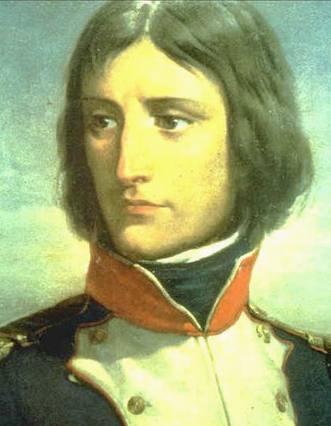
By 1798 the French government didn’t stand a chance. Not even the spirit of the French people could save the dictatorial Directory that was reversing all of the work that the French people had done to get equal rights. Could the French government have survived without Napoleon’s coup? In my opinion, it could not have. Napoleon’s intervention was necessary; a strong, cunning leader was needed to patch together of fractured France. Much of Napoleon’s government was about gaining power, manipulating deals, and getting the French people, and any other countries, to succumb to his will. Napoleon made peace with the Old Regime nobles, the church and the middle class. He set out the idea of a family unit where the father had complete power over his wife and children, much like Napoleon’s power over all of France. Could it be said that Napoleon’s creation of a patriarchal family unit be considered propaganda? Reflecting on the political environment, I believe Napoleon used this as a form of propaganda. As the southerners of the antebellum South in America in protecting their patriarchal power of both family and slaves promoted this concept of both paternal oversight and social stratification, so too did Napoleon wish to convey both an image of a protector and a ruler. This image is one that the French commoner would both understand and accept as the head of their government. It was Napoleon’s insight that finally led to unity in France, but Napoleon’s agenda went beyond the unification of France to the domination of a great empire.
It cannot be denied that Napoleon was a genius when it came to the strategies of the battlefield. Against most of Europe, Napoleon was able to amass a “Grand Empire”. By 1802, Napoleon had no need to battle others, he was popular with the French people, the government was stable, and all outside threats were gone; however, war was in Napoleon’s blood, so he fought. After a devastating loss to Lord Nelson in 1805 Napoleon defeated the third coalition, which was made up of Austria, Russia, Sweden and Britain. He began to organize a blockade, preventing British trade.
But war is costly. There is pay for the men, the purchase firearms and munitions, ships, food, lodging, training and countless other expenses necessary for success and Napoleon was successful. To afford these conquests, Napoleon began to tax the French heavily and draft copious numbers of men for his army. Napoleon’s attempt to blockade British trade backfired for Britain had decided to counter blockade. This kept the British from suffering from the French blockade while depriving the French middle class of their livelihood that was tied to trade. The cost of war and the deprivations linked to war dulled the golden light that had surrounded Napoleon and he was no longer a hero. He had become a tyrant.
Had Napoleon continued a successful march through Europe, conquering each subsequent country, his financial demands would have been met with a patriotic French populace but Napoleon committed military suicide in his attempt to overcome Moscow. Now crazed in his effort to gain power, Napoleon marched through Russia to the city of Moscow. But Moscow could not be defeated and Napoleon retreated, bringing home only half of the 600,000 men from his original army. Unclouded by his military ambition, Napoleon could have settled on a proposal to restore France to its former size. Instead Napoleon returned to France, raised a new army and set out to recover and then add to the land he had amassed, in earlier conquests.
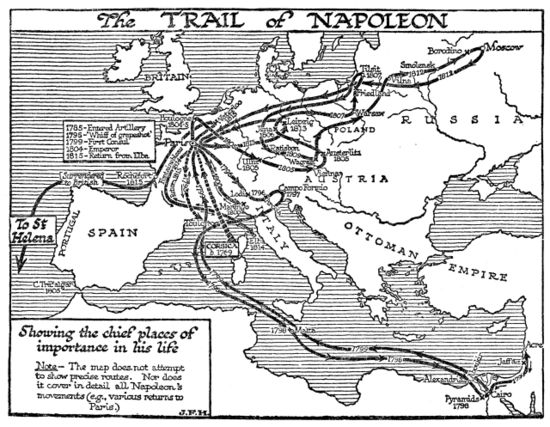
Even after being exiled to the island of Elba, Napoleon attempted to stage a comeback. But such an attitude, originally viewed as heroic must be question. Napoleon provided direction and strength when the country needed a leader. But when does it go to far? It was said that if Napoleon had just accepted France at it’s historical size that he would have been saved, but his own persistence turned around and slapped him. However, was it possible for a man with less of a vision and thirst for power to restore tumultuous France, I’m not so sure. Like many other great historical figures, Napoleon was a blend of genius and crazy, and his forceful ways did help restore France after the bloodiest revolution in history.

Thursday, November 11, 2010
Is Violence Really Necessary?

 In his "The Terror Justified" speech to the National Convention on February 5, 1794, Maximilien Robespierre describes the goals of the Revolution. "It is time to mark clearly the aim of the Revolution and the end toward which we wish to move;" To sum up Robespierre's justification of the Great Terror, he reasoned that only through violence can a people achieve equality. His words echo those of other great revolutionaries. The legendary Che Guevara once said "I am not a liberator. Liberators do not exist. The people liberate themselves." Both Robespierre and Guevara believed in revolution as the birth to equality and as the antithesis to oppression. The question is; is violence justified in the pursuit of liberty (happiness)? Is it necessary? Certainly, the sans-culottes depicted in Delacroix's "Liberty Leading the People" fearlessly pursue Liberty clad with swords and muskets as the American colonists pursued her against the British. Rather than taking a stance personally on this question, I'd like to see what others think first. If you don't believe that violence is necessary to achieve equality, can you provide a historical event that supports you? Or would you agree with Robespierre? and feel that he is vindicated in sending tens of thousands to their deaths. Che Guevara once said that a revolutionary is guided by love. But does love automatically guide us into violence?